



BLOGS
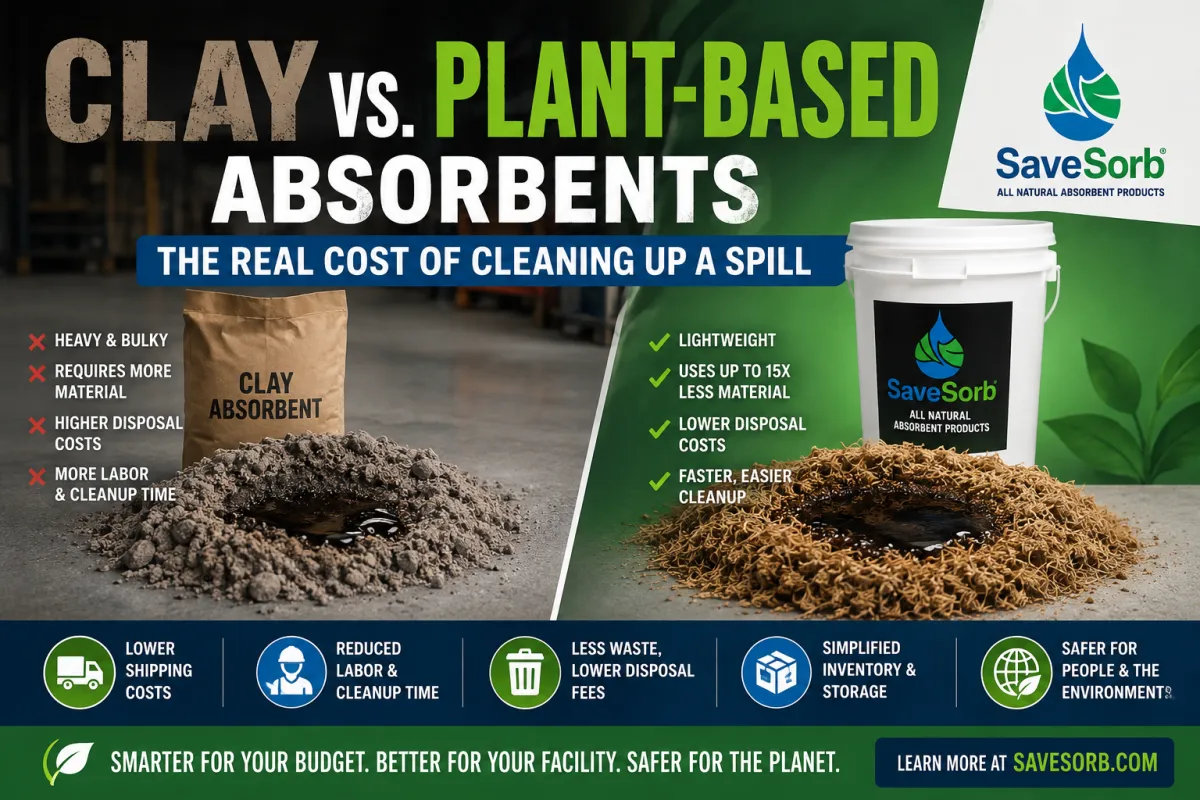
Clay vs. Plant-Based Absorbents: The Real Cost of Cleaning Up a Spill
If your facility still reaches for a bag of clay granules or "oil-dry" every time there's a spill, you're not alone. Clay-based absorbents have been the default for decades. But the sticker price on a bag tells only a small part of the story. When you add up weight, disposal, labor, and safety, the traditional option often ends up being the expensive one.
Here's how the numbers really stack up.
The problem with paying by the bag
Clay absorbents are cheap per bag, and that's exactly why they're so easy to keep buying. The catch is how much you have to use. Clay simply coats a spill rather than pulling the liquid in, so you need a lot of material to handle even a modest mess. SaveSorb, by contrast, is a hyper-absorbent that can require up to 15 times less material than conventional products to clean up the same spill. Fewer bags used means fewer bags purchased, stored, and hauled away.
Disposal is where budgets quietly bleed
Every pound of absorbent you use becomes a pound of waste you have to dispose of, and disposal is often billed by weight. Clay is heavy and it doesn't reduce the volume of what you're throwing out. SaveSorb is lightweight and can absorb several times its own weight, so a smaller quantity captures the same spill and produces far less saturated waste. Lower waste volume translates directly into lower hauling and disposal fees.
The hidden line items
Shipping: Heavy clay costs more to ship in and store. Lightweight material lowers freight on the way in.
Labor: Hauling, spreading, and sweeping heavy granules is slow and physically demanding. A lighter, faster-absorbing product cuts cleanup time.
Inventory: Many operations stock several different absorbents for different jobs. One versatile product that handles oil, fuel, chemicals, and paint simplifies purchasing and frees up shelf space.
Add it all up
The bag of clay looks cheaper at the register, but the true cost of a spill is purchase price + shipping + labor + storage + disposal. When you weigh all five, a plant-based hyper-absorbent frequently comes out ahead — while also being safer and better for the environment.
Ready to see what your real cost-per-spill could look like? Explore the SaveSorb product line and rethink what "affordable" actually means.

Subscribe to News & Offers
Be the first to know about new products and exclusive offers.
Search | FAQ | Returns | Privacy Policy | Terms of Use


© 2025, SaveSorb LLC