



BLOGS
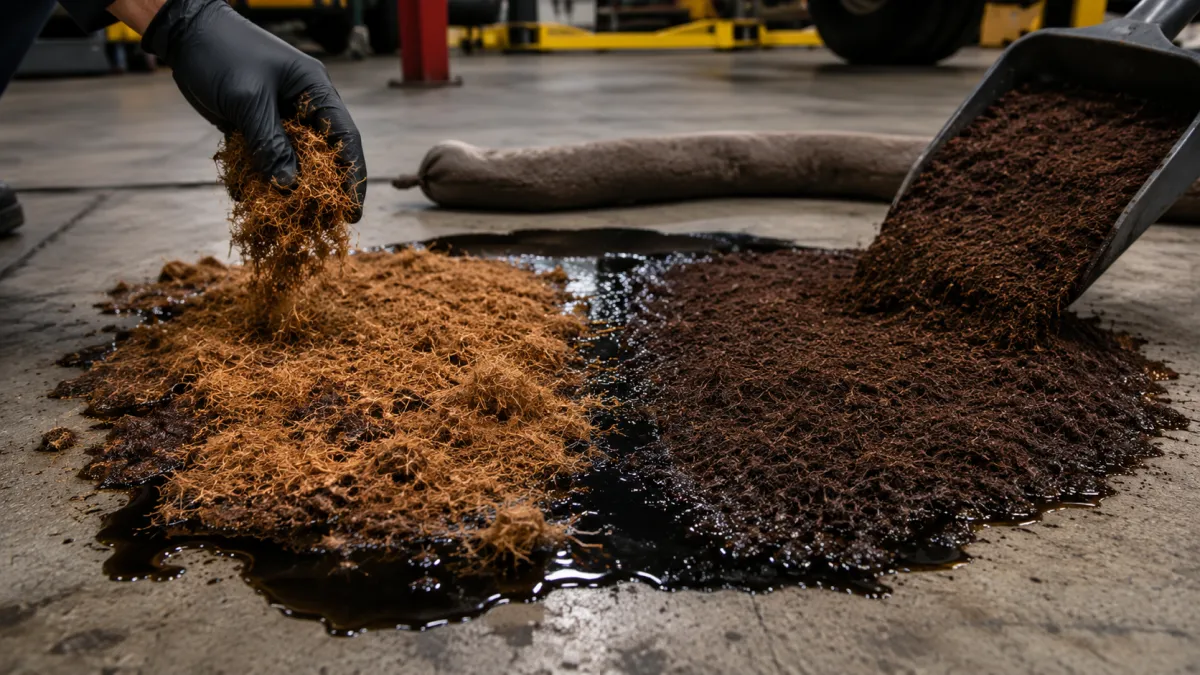
Peat Moss vs Coconut Coir for Oil Spill Cleanup | Which Absorbent Performs Better?
When oil, fuel, hydraulic fluid, or chemical spills hit a shop floor, fleet yard, marina, or industrial workspace, cleanup speed and containment performance directly affect safety, labor cost, and environmental risk.
Many buyers searching for greener alternatives to clay oil dry products are now comparing peat moss oil absorbent vs coconut coir. Both are plant-based. Both are marketed as eco-conscious. But operationally, they do not perform equally.
The difference between an absorbent that quickly encapsulates hydrocarbons and one that simply soaks surface liquid can determine whether a spill becomes a controlled cleanup or an ongoing hazard.
For fleet managers, garage owners, safety officers, and spill response buyers, material science matters more than sustainability marketing.
This guide breaks down the real performance differences between sphagnum peat moss and coconut coir absorbents so you can choose the right solution for real-world spill response.
What Is Coconut Coir?
Coconut coir is a fibrous material derived from coconut husks. It is commonly used in agriculture, erosion control, horticulture, and some absorbent applications.
Coir is renewable and widely available, making it attractive for environmentally conscious buyers. It is often processed into:
Loose fibers
Mats
Pellets
Bricks
Spill containment products
Strengths of Coconut Coir:
Renewable resource
Biodegradable
Lower dust than clay
Moderate liquid absorption
Often used in environmental applications
Limitations of Coconut Coir for Oil Spill Cleanup:
Heavier fiber structure
Slower oil uptake compared to fine peat fibers
Reduced hydrocarbon encapsulation
Lower retention under pressure
Less efficient for rapid spill response
Often better for water retention than oil selectivity
While coconut coir can function as a coir absorbent, not all natural fibers are optimized for hydrocarbon cleanup.
What Is Sphagnum Peat Moss?
Sphagnum peat moss is partially decomposed organic plant material harvested from peat bog ecosystems. For industrial absorbent applications, its structure offers highly refined capillary action and hydrocarbon affinity.
Its fine, lightweight, fibrous composition creates:
High surface area
Fast absorption speed
Strong oil attraction
Vapor suppression
Superior encapsulation
Lightweight waste loads
Advantages of Peat Moss Oil Absorbent:
Extremely fast oil and fuel absorption
Strong oleophilic behavior
Lower material usage per spill
Reduced slip hazards
Excellent retention with minimal leaching
Lower disposal costs due to lightweight saturation
Superior performance in granular absorbent applications
Products like SaveSorb leverage these structural advantages for industrial spill control, combining natural material with operational superiority.
Fiber Structure Comparison: Why Material Science Determines Performance
The largest performance gap between peat moss and coconut coir lies in fiber structure.
Coconut Coir:
Coarser fibers
More rigid texture
Larger particle structure
Slower penetration into surface oils
Less aggressive encapsulation
Sphagnum Peat Moss:
Fine, shredded microfibers
Lightweight capillary network
Larger functional absorption surface area
Rapid oil draw-in
Superior lock-in performance
Real-World Result:
Peat moss oil absorbent generally absorbs and retains hydrocarbons faster and more completely than coconut coir, particularly on:
Concrete shop floors
Asphalt
Equipment yards
Marine surfaces
Fleet maintenance areas
For emergency spill response, speed matters.
Oil Absorption Speed: Which Material Responds Faster?
In industrial environments, delayed absorption increases:
Slip hazards
Labor time
Spill spread radius
Drain contamination risk
Regulatory exposure
Coconut Coir Performance:
Coir can absorb oil, but typically at a slower rate due to denser structure and reduced capillary efficiency.
Peat Moss Performance:
Peat moss rapidly pulls oil into its fiber network, helping responders:
Stop spread faster
Reduce surface slickness sooner
Use less product overall
Complete cleanup with fewer passes
Bottom Line:
For fast-response spill cleanup products, sphagnum peat moss consistently outperforms coconut coir in speed-critical scenarios.
Retention and Anti-Leaching Performance
Absorbing oil is only half the job.
True industrial oil absorbent performance requires keeping hydrocarbons locked inside the material during:
Foot traffic
Equipment movement
Disposal handling
Compression
Environmental exposure
Coconut Coir:
Moderate retention
Potential release under pressure
Less effective encapsulation
Peat Moss:
Strong hydrocarbon binding
Superior encapsulation
Reduced re-release risk
Lower secondary contamination
This makes peat moss-based absorbents safer for:
Auto shops
Heavy equipment facilities
Transportation yards
Spill kits for roadside emergencies
Weight Efficiency and Disposal Cost Comparison
Many buyers underestimate disposal economics.
Traditional oil dry alternatives like clay and heavier natural fibers can dramatically increase waste hauling costs.
Coconut Coir:
Heavier than peat in many applications
More product often needed
Higher saturated waste volume
Peat Moss:
Lightweight before and after use
Lower product consumption
Reduced disposal weight
Lower hazardous waste transport cost
Why This Matters:
For recurring spill response, disposal cost savings can significantly impact annual operating budgets.
SaveSorb’s peat-based system often reduces both labor and disposal expenses compared to heavier alternatives.
Dust Levels and Workplace Cleanliness
Dust control affects:
Worker respiratory safety
Equipment cleanliness
Secondary cleanup labor
Indoor air quality
Clay Absorbents:
High dust
Silica concerns
Messy cleanup
Coconut Coir:
Lower dust than clay
Cleaner than mineral absorbents
Peat Moss:
Minimal airborne particulate
Cleaner application
Strong odor suppression
Improved operational cleanliness
For enclosed shops and garages, this difference improves usability and worker preference.
Slip Hazard Reduction
The longer oil remains active on a surface, the greater the accident risk.
Coir:
Moderate response, but slower absorption can leave slick surfaces active longer.
Peat Moss:
Rapid draw-down minimizes:
Slip hazards
Vehicle tracking
Worker falls
Spread into drains
This is particularly important for:
Service bays
Loading docks
Fuel stations
Municipal fleets
Marine maintenance facilities
Spill Kit Performance: Complete Response Matters
Professionals do not rely solely on loose granular absorbent.
Effective Spill Response Uses Two Steps:
Step 1: Contain First
Deploy:
Socks
Booms
Pillows
Spillows
These products stop migration and protect drains.
Step 2: Absorb and Finish
Apply granular absorbent to fully remove surface contamination.
Why SaveSorb’s System Performs Better
SaveSorb integrates:
Peat moss granular absorbent
Reusable absorbent socks
Pillows
Spill mats
Truck and garage spill kits
Key Advantages:
Faster cleanup
Reusable containment products until saturation
Lower waste generation
Better cost efficiency
Reduced environmental risk
Superior hydrocarbon retention
This system approach consistently outperforms many coir-only or clay-based kits.
Misconception: “Natural” Does Not Automatically Mean High Performance
Many buyers assume all plant-based absorbents perform similarly.
This is inaccurate.
Critical Variables Include:
Fiber density
Surface area
Oil affinity
Retention strength
Product weight
Real-world spill application
Coconut coir may be sustainable, but sustainability alone does not equal superior spill response.
For industrial buyers, performance must lead purchasing decisions.
Industrial Applications Where Peat Moss Outperforms Coconut Coir
Automotive Shops:
Oil leaks
Transmission fluid
Brake fluid
Fuel spills
Fleet Maintenance:
Hydraulic leaks
Diesel spills
Preventive maintenance drips
Marine:
Fuel dock response
Bilge leaks
Equipment fueling spills
Industrial Facilities:
Chemical containment
Machine lubrication leaks
Production floor spills
In these environments, faster absorption, stronger retention, and lower disposal cost directly improve ROI.
Final Verdict: Peat Moss vs Coconut Coir for Oil Spill Cleanup
Coconut Coir:
Best for:
Basic environmental use
General absorbency
Lower-performance green applications
Peat Moss:
Best for:
Industrial oil spill cleanup
Fleet operations
Garage and shop safety
Spill kits
Hydrocarbon containment
Cost-efficient recurring use
Overall Winner:
Sphagnum Peat Moss
For buyers prioritizing:
Performance
Speed
Safety
Cost control
Professional spill response
Peat moss oil absorbent clearly delivers superior real-world operational value.
Why SaveSorb Is the Practical High-Performance Choice
SaveSorb combines advanced peat moss absorbent science with reusable containment solutions designed for actual industrial spill conditions.
SaveSorb Delivers:
Faster oil absorption
Better encapsulation
Lower disposal costs
Cleaner operation
Reduced slip hazards
Eco-friendly practical superiority
Reusable socks, pillows, and spill systems
For businesses that cannot afford weak cleanup performance, SaveSorb offers a smarter solution than standard coir absorbent, clay oil dry, or polypropylene-only spill kits.
Ready to Upgrade Your Spill Response?
If you are evaluating coconut coir oil absorbent, peat moss oil absorbent, or oil dry alternatives, real-world performance should drive your decision.
SaveSorb provides professional-grade spill kits, granular absorbents, reusable socks, pillows, and industrial spill response systems engineered for superior cleanup speed, stronger retention, and lower operational costs.
Explore SaveSorb’s high-performance spill solutions:
https://savesorb.com/
For fleet managers, shop owners, industrial buyers, and safety professionals seeking better spill response, SaveSorb offers the practical advantage where performance matters most.
Protect your people, reduce waste, and upgrade to a spill cleanup system built to outperform.

Subscribe to News & Offers
Be the first to know about new products and exclusive offers.
Search | FAQ | Returns | Privacy Policy | Terms of Use


© 2025, SaveSorb LLC