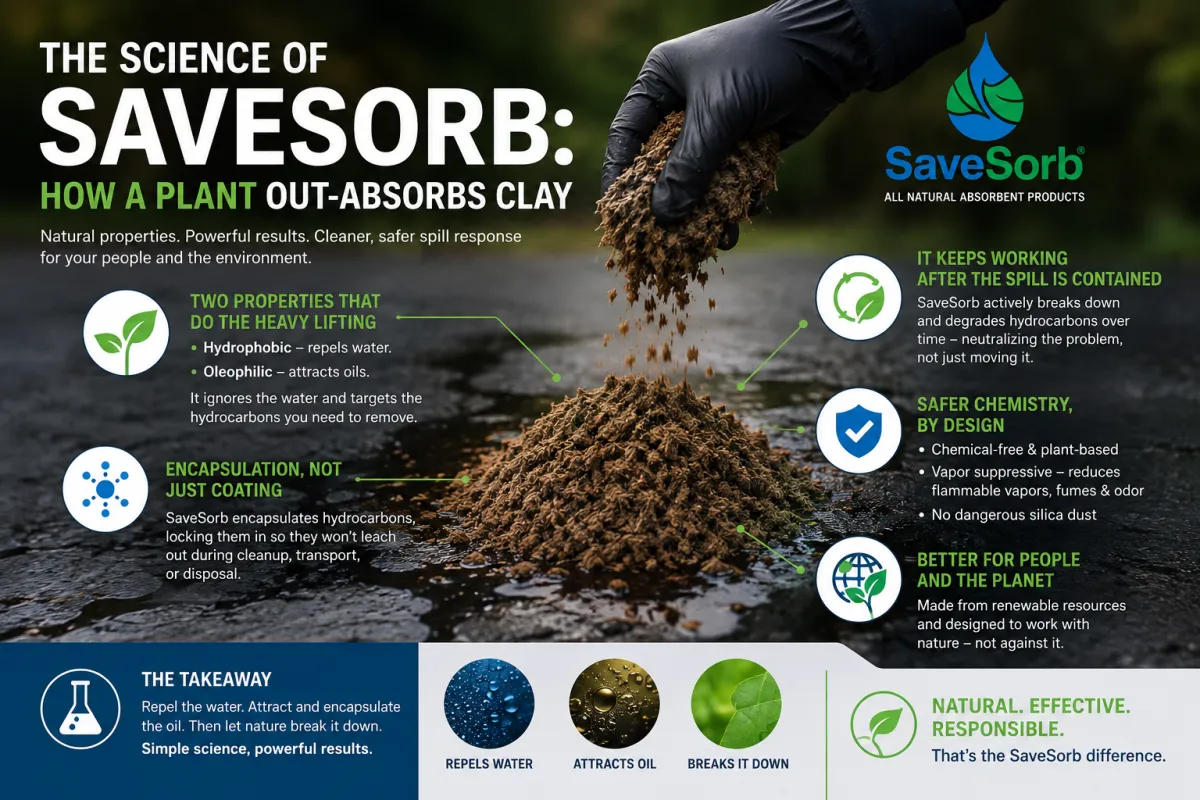
The Science of SaveSorb: How a Plant Out-Absorbs Clay
At first glance, using plant material to clean up an oil spill sounds almost too simple. But there's real science behind why SaveSorb works — and why it does the job faster and more completely than the clay granules many facilities have relied on for years. Understanding the "how" makes it clear why so many fire departments and industrial crews have switched.
Two properties that do the heavy lifting
SaveSorb is made from 100% plant matter, and its power comes from two natural characteristics working together:
Hydrophobic — it repels water.
Oleophilic — it attracts oils.
This combination matters. When you apply SaveSorb to a spill in a wet environment — a rain-soaked road, a marina, even snow — it ignores the water and goes straight for the hydrocarbon. It targets the oil, fuel, chemical, or paint you actually want to remove, rather than soaking up everything indiscriminately the way clay does.
Encapsulation, not just coating
Clay tends to sit on top of a spill and coat it. SaveSorb goes further: it encapsulates the hydrocarbon, drawing it into the plant material and locking it in. Once encapsulated, the material becomes non-leaching, meaning the captured liquid stays put during cleanup, transport, and disposal. That's why a fully absorbed batch won't leak when you sweep it up.
It keeps working after the spill is contained
Here's the part that sets a biodegradable absorbent apart from a disposal-only product. SaveSorb doesn't stop at containment — it actively begins breaking down and degrading the hydrocarbons it captures. Instead of simply moving a problem into a landfill, the material starts to neutralize it over time.
Safer chemistry, by design
Because SaveSorb is chemical-free and made from renewable plant matter, it introduces no new hazards into the cleanup. It's also vapor suppressive: by reducing flammable vapors significantly, it lowers the risk of ignition and cuts down on fumes and odor during a spill event. And unlike clay, it produces no dangerous silica dust.
The takeaway
SaveSorb's effectiveness isn't magic — it's the result of natural material properties applied intelligently. Repel the water, attract and encapsulate the oil, then let nature break it down. Simple science, powerful results.
Curious about the details behind the product? Learn how SaveSorb works.
